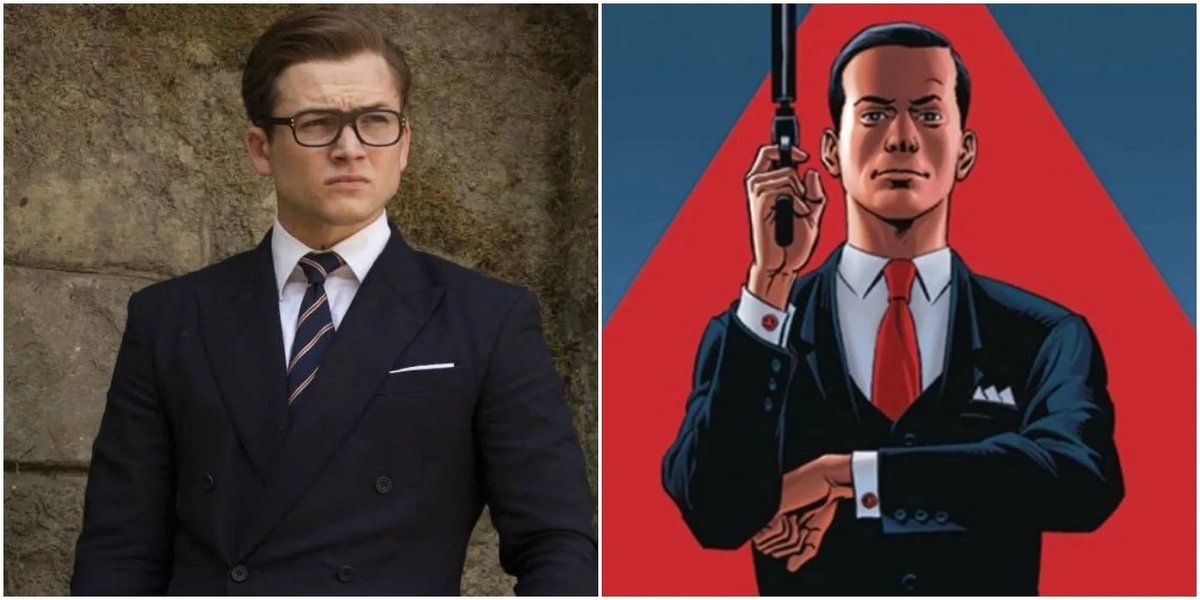
When you hear "Kingsman," chances are your mind conjures images of impeccably tailored suits, sophisticated gadgets, and explosive, hyper-stylized action sequences. But before the cinematic spectacle, there was Kingsman Comics & Source Material: The Original Story—a much grittier, darkly satirical take on the spy genre that laid the foundation for the beloved franchise. Understanding its origins is key to appreciating the full scope of this unique universe.
This isn't just a tale of a comic book becoming a movie; it's a fascinating study in adaptation, where core ideas are preserved, but tone, character dynamics, and even the very fabric of the spy organization are reimagined. From its initial title, "The Secret Service," to its blockbuster transformation, the journey of Kingsman is as intriguing as any espionage mission.
At a Glance: The Kingsman Origin Story
- The Original Name: The comic series was initially titled "The Secret Service."
- Creators: Mark Millar (writer) and Dave Gibbons (artist).
- Publisher: Marvel’s Icon Comics imprint (started April 2012).
- Why the Film Name Change? "Kingsman" was chosen for branding, uniqueness, and trademarking, as "The Secret Service" is generic.
- Core Idea: Both iterations celebrate and subvert classic British spy thrillers.
- Major Differences: The film significantly alters the hero's mentor, the villain's portrayal, the organization's identity, and its overall tone, introducing iconic elements like the independent Kingsman agency and its "Manners Maketh Man" motto.
- Chronological Order: The comics and films interweave, with a prequel film kicking off the timeline.
The Genesis: When "The Secret Service" First Debuted
In April 2012, two titans of the comic book world, writer Mark Millar (known for Kick-Ass, Wanted) and artist Dave Gibbons (Watchmen), unveiled a new miniseries under Marvel’s Icon Comics imprint. Its original title? "The Secret Service." This wasn't just a catchy name; it was a deliberate nod to the rich history of British spy thrillers, a genre they aimed to both honor and irreverently dismantle.
Millar and Gibbons set out to create something that felt both familiar and shockingly new. They crafted a seven-issue story that plunged readers into a world where everyday class struggles collided with high-stakes global espionage. The comic was less about flashy gadgets and more about the biting social commentary embedded within the British class system, using the spy narrative as a vehicle for sharp, often cynical, satire. It was a bold statement, immediately establishing itself as a distinct voice in the crowded comic landscape.
From Page to Screen: The Cinematic "Kingsman" Transformation
When director Matthew Vaughn decided to adapt "The Secret Service" for the big screen, a crucial decision was made early on: the title had to change. "The Secret Service" was not only a common phrase but also the name of a real U.S. federal agency, making it incredibly difficult to trademark and market uniquely across the globe. Enter "Kingsman."
This new title wasn't just arbitrary. It was cleverly integrated into the film's narrative, becoming the name of the bespoke tailor shop on Savile Row, which served as the ingenious front for the independent intelligence agency. This distinctive name proved to be a stroke of genius, offering instant brand recognition and paving the way for a successful franchise that would include sequels like Kingsman: The Golden Circle and the prequel, The King's Man. The 2014 film, Kingsman: The Secret Service, went on to gross over $414 million worldwide, proving that audiences were more than ready for this fresh take on the spy genre. Its success solidified "Kingsman" as a household name, synonymous with stylish action and irreverent humor.
Decoding the Mythology: The Fictional Kingsman Agency
One of the most significant and effective inventions of the cinematic universe was the creation of the Kingsman agency itself. In the comics, Eggsy's mentor worked for MI6, a real British intelligence agency. The film, however, conjured an entirely fictional, independent entity with its own compelling backstory.
According to the film's lore, the Kingsman agency was born from tragedy and wealth after World War I. A group of wealthy British aristocrats, having lost their heirs in the war, decided to pool their fortunes. Their aim was not to mourn, but to build an organization operating entirely outside government control, dedicated to protecting the world from threats that official channels couldn't or wouldn't address. They adopted the name of their tailor, Kingsman, a symbol of discretion and understated excellence.
This agency's internal structure also received a significant upgrade. Agents were given codenames derived from the legendary Knights of the Round Table: Arthur, Galahad, Lancelot, Merlin. This added a layer of mythic heroism and tradition, fitting for an organization built on old-world values. Their enduring motto, "Manners Maketh Man"—a 14th-century quote from William of Wykeham—became more than just a phrase; it was a cornerstone of their philosophy, emphasizing conduct, integrity, and respect, even amidst chaos and violence. If you're looking to dive deep into all the gadgets, lore, and chronological viewing order, you might want to check out a comprehensive Kingsman watch guide.
Divergent Paths: Comic vs. Film - A Side-by-Side
While the core premise of a rough-around-the-edges protégé being groomed into a super-spy remained intact, the journey from comic to film involved a host of creative liberties that dramatically reshaped the story and its characters.
The Protagonist: Eggsy Unwin
- Comic's Gary "Eggsy" Unwin: A profoundly disaffected youth from a Peckham council estate. His story is a blunt instrument of social commentary, showcasing the grim realities and limited opportunities faced by many working-class individuals in Britain. His transformation is less about charm and more about raw, untapped potential forced into a new mold.
- Film's Eggsy: While still working-class, Taron Egerton's Eggsy possesses an inherent charm and a "diamond in the rough" quality. His narrative leans into a more classic hero's journey, emphasizing redemption and the overcoming of personal obstacles, making him instantly more likable and relatable for a broader audience.
The Mentor: Jack London vs. Harry Hart (Galahad)
- Comic's Mentor: Jack London, Eggsy's pragmatic, often cynical super-spy uncle. Their relationship is familial but also fraught with the complexities of their shared background and Jack's detached approach to his work.
- Film's Mentor: Harry Hart, or Galahad (played by the incomparable Colin Firth), is not related to Eggsy but was a friend of Eggsy's deceased father. This allowed for a deeper, more paternal bond built on respect and shared values rather than blood. The introduction of "Galahad" and the other Knights of the Round Table codenames were brilliant film inventions, adding to the organization's mystique.
The Villain: Dr. James Arnold vs. Richmond Valentine
- Comic's Villain: Dr. James Arnold, a tech billionaire with a chilling plan to "solve" climate change by inducing global violence, thereby culling humanity. He's a more understated, sinister threat.
- Film's Villain: Richmond Valentine (memorably played by Samuel L. Jackson) is a lisping, germophobic tech billionaire with a similar ecoterrorist agenda, using free SIM cards to trigger mass violence. Valentine is a far more flamboyant and eccentric antagonist, embodying the film's over-the-top sensibilities.
The Infamous Church Massacre
- Comic: The original comic depicts mass violence on a global scale but doesn't feature the specific, highly choreographed church massacre scene.
- Film: This scene stands as one of the film's most brutal and iconic centerpieces. It's a visually stunning, ultra-stylized sequence that perfectly encapsulates the movie's unique blend of shocking violence and balletic action, pushing boundaries and defining the film's distinct tone.
Tone and Style
- Comic's Tone: Gritty, cynical, and a dark social satire. It's grounded in a more realistic, albeit exaggerated, commentary on the British class system and societal decay. The violence is impactful but less stylized.
- Movie's Tone: Hyper-stylized, energetic, and bombastic. It's an unashamedly over-the-top homage to classic Bond films, embracing stylized violence with a wink and a smile. The film prioritizes entertainment and spectacle, creating a unique visual language.
The Organization
- Comic's Organization: Eggsy's mentor works for MI6, simply presented as a high-tech version of the real British Secret Intelligence Service.
- Movie's Organization: As discussed, the film entirely invents the independent Kingsman agency, complete with its own rich history, unique mythology, and secret headquarters disguised as a tailor shop. This allowed for greater creative freedom and world-building.
The Chronological Journey: Navigating the Kingsman Universe
For newcomers and seasoned fans alike, piecing together the timeline of the Kingsman universe can be a bit of a puzzle, mixing comics and films. Here’s the generally accepted chronological viewing order to make sense of the intricate web of stories:
- The King’s Man (2021 Film): This is the cinematic prequel, delving into the very origins of the Kingsman agency during World War I. It explains how the organization was founded by British aristocrats who decided to pool their resources to create an independent intelligence unit. It’s an essential watch for understanding the agency's roots and initial mission.
- The Secret Service (2012 Comic): This seven-issue miniseries is the original story featuring Jack London (Eggsy's uncle) and the raw, unpolished Gary "Eggsy" Unwin. It's a darker, more satirical take than its film adaptation, and reading it provides a fascinating insight into Millar and Gibbons' initial vision.
- Kingsman: The Secret Service (2014 Film): This is the direct cinematic adaptation of the original comic, but with the significant changes discussed above. It introduces Harry Hart/Galahad and the independent Kingsman agency to a global audience, becoming a cultural phenomenon in its own right.
- Kingsman: The Red Diamond (2017 Comic): A direct sequel to the original "The Secret Service" comic, this series continues Eggsy's adventures in a world that largely ignores the film's distinct lore. It offers a different path for the characters established in the comic.
- Kingsman: The Golden Circle (2017 Film): This cinematic sequel picks up directly after the first film, expanding the Kingsman universe by introducing their American counterparts, the Statesman. It continues the high-octane action and irreverent humor that defined the first movie.
Navigating this mixed-media timeline can be rewarding, offering different perspectives on the characters and the evolving world of Kingsman. For a more detailed guide on where to start and what to watch next in the Kingsman universe, consult our Kingsman watch guide.
Beyond the Page: Kingsman's Enduring Impact
The Kingsman comics, and subsequently the films, have carved out a significant niche in popular culture, leaving an indelible mark on the spy genre and beyond.
Revitalizing the Spy Genre
By blending classic espionage tropes with subversive humor and exaggerated characters, Millar and Gibbons revitalized a genre that, at times, felt predictable. They injected it with a fresh dose of punk rock irreverence, showing that spy stories could be both thrilling and profoundly witty. The films then amplified this, turning it into a hyper-stylized spectacle.
Fashion and Flair
Who can think of Kingsman without picturing those impeccably tailored suits? The franchise has had an undeniable influence on men's fashion, emphasizing the timeless elegance of bespoke tailoring and proving that a gentleman spy is always in style. The Kingsman brand itself, with its associated merchandise, has become a symbol of sophisticated cool.
Iconic Scenes and Narrative Structure
From the explosive church massacre to the ingenious use of gadgets disguised as everyday gentleman's accessories, the franchise is replete with iconic scenes that showcase exceptional creativity. Both the comics and films utilize sharp, witty dialogue, and cinematic visual techniques to build tension and engage their audience. The narrative often employs non-linear storytelling elements, keeping readers and viewers on their toes.
Critical Acclaim and Thematic Depth
Critics have largely lauded the Kingsman franchise for its unique blend of action, wit, and underlying social commentary. Beyond the explosions and one-liners, the stories explore profound themes:
- Espionage Ethics: The murky moral waters agents must navigate, often blurring the lines between heroism and villainy.
- Class and Societal Structures: Particularly in the comics, the stark contrast between the elite spy world and Eggsy's humble origins serves as a potent critique of British society.
- Family and Legacy: The found-family aspect between Eggsy and Harry, and the legacy of the Kingsman agency itself, resonate deeply.
- The Nuanced Representation of Authority: Questioning who truly holds power and whether it's always used for good.
The layered character development and vivid art style in the comics, combined with the magnetic performances and stunning visuals in the films, have ensured that Kingsman remains a critical darling and a commercial success.
Your Next Mission: Diving Deeper into Kingsman's World
Whether you started with the irreverent humor of the movies or the gritty satire of the comics, the Kingsman universe offers a rich tapestry of stories, characters, and ideas to explore. The franchise continues to evolve, with potential new story arcs, spin-off series, and further explorations of the organization's history and international settings hinted at.
To truly appreciate the brilliance of Kingsman Comics & Source Material: The Original Story and its subsequent adaptations, consider revisiting both the comics and the films. You'll find a deeper understanding of the creative decisions made, the themes explored, and the sheer audacity that makes Kingsman stand out. Ready to plan your viewing and reading journey? Our comprehensive Kingsman watch guide is an excellent resource for navigating the complete Kingsman story. Dive in, and remember: "Manners Maketh Man."